- Date :08 Jul, 2026
- Category : Organic Chemistry
Carboxylic Acids: Essential Compounds for Our Lives
Even if the term “carboxylic acid” doesn’t sound familiar, these compounds are vital to our daily lives. For instance, “acetic acid,” the main component of vinegar, and “citric acid,” found in lemons, are both types of carboxylic acids. These compounds are crucial not only as food additives and industrial materials but also as raw materials or core structures for pharmaceuticals.
Traditional methods for synthesizing carboxylic acids have faced several challenges. Many often require expensive and environmentally burdensome “transition-metal catalysts” (metals that accelerate reactions but become waste after use) or generate hazardous “peroxides” (unstable substances that can be explosive). Therefore, there has been a strong demand for more environmentally friendly and safer synthesis methods.
Light and Water: A Greener Approach to Carboxylic Acid Synthesis
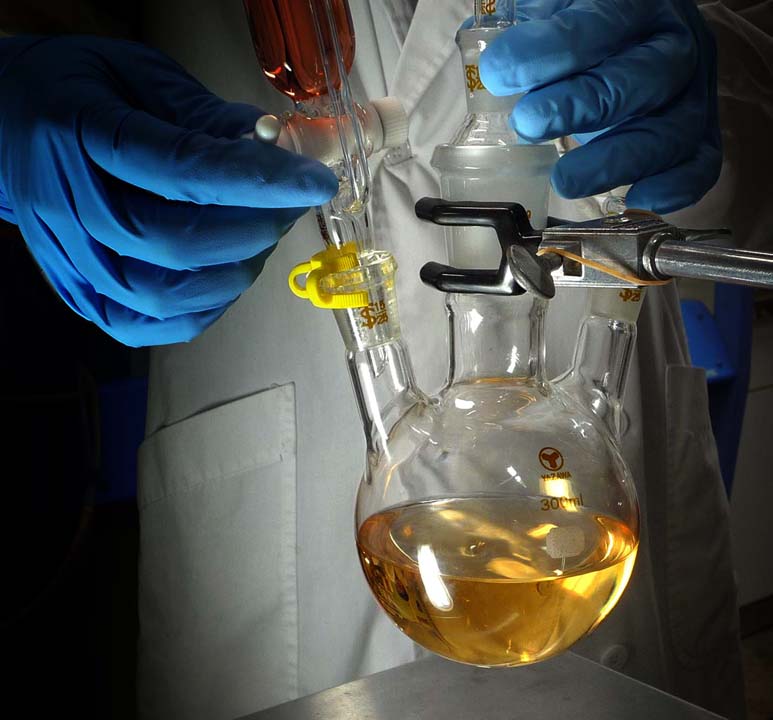
We have developed a new method to synthesize carboxylic acids from aldehydes or alcohols using light and water—two incredibly common and environmentally benign resources. This reaction is called a “photochemical reaction,” which means it uses the energy of light to drive chemical transformations.
Specifically, by irradiating with purple LED light, a bromine atom is introduced into the C-H bond (the bond between a carbon atom and a hydrogen atom) of aldehydes or alcohols. This process generates a special intermediate called “acyl-bromide” in situ (meaning it’s formed right in the reaction mixture and is unstable) upon irradiation. This acyl-bromide then quickly reacts with water to yield the desired carboxylic acid.
Potential for Safe and Diverse Compound Synthesis
The most significant advantage of this new synthesis method lies in its ability to overcome traditional challenges:
- No transition-metal catalysts needed: Eliminates the need for expensive and environmentally impactful catalysts.
- No peroxide generation: Prevents the formation of hazardous byproducts.
- Mild conditions: The reaction proceeds under gentle conditions, such as room temperature.
This method can efficiently synthesize various types of carboxylic acids, making it a highly promising tool for the synthesis of “natural products” and “bioactive compounds” (substances that have specific effects within living organisms) that serve as precursors for pharmaceuticals. This research highlights the potential for achieving safer and cleaner organic synthesis through the power of light.
Reference
- Mohamed R. El-kholany, Atsuya Miyamoto, Morgane Falcone, Hiroyoshi Takamura, Isao Kadota, Kenta Tanaka (2026) “Photochemical oxidative synthesis of carboxylic acids from aldehydes or alcohols with water via CH bromination” Tetrahedron Letters, 2026, 156163. DOI: 10.1016/j.tetlet.2026.156163
Learn more about Prof. Tanaka → Organic Chemistry Lab